
The Dog House
Holistic care that honors dogs as whole beings — body, nervous system, and spirit.
This is not veterinary medicine.
The Dog House offers complementary, intuitive, and grounded care rooted in thousands of years of relationship between humans, animals, plants, and seasons. This work is meant to support — not replace — appropriate veterinary care.
Dogs are not small humans.
They are living nervous systems shaped by constitution, environment, rhythm, and relationship.
The Dog House is where Ayurvedic wisdom and herbal common sense are applied thoughtfully to real dogs living real lives. Here, we look at patterns rather than pathologies. Balance rather than urgency. Observation rather than overwhelm.
This approach considers digestion, behavior, energy, and emotional regulation as interconnected expressions of the same system — and works gently to support steadiness over time.
If you live with a dog, you already practice this kind of care. This space simply gives it language.
Classic Dosha Expressions in Dogs
Examples, not rules.
While most dogs are a blend of doshas, certain breeds and body types often express one dosha more clearly than others. These examples are meant to help you recognize patterns, not define your dog.
Vata-dominant dogs often include:
Whippets, Italian Greyhounds, Border Collies, Chihuahuas, and many lean or lightly built mixed-breed dogs.
Pitta-dominant dogs often include:
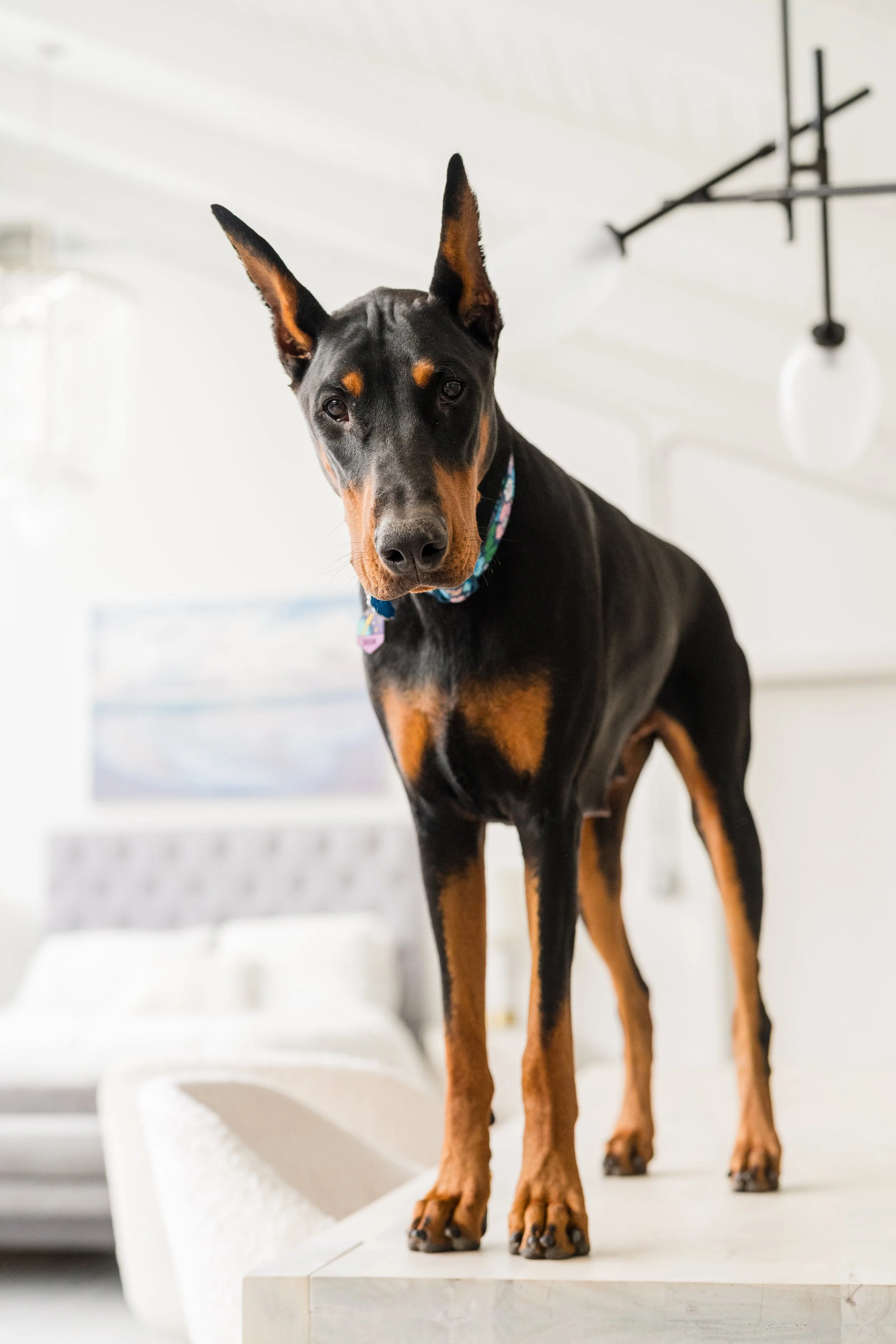
German Shepherds, Belgian Malinois, Doberman Pinschers, Vizslas, and other driven working or protection breeds.
Kapha-dominant dogs often include:
Golden Retrievers, Labrador Retrievers, English Bulldogs, Saint Bernards, and larger, heavier-boned or especially calm dogs.
Many dogs express different doshas at different stages of life, seasons, or stress levels. Puppies, adolescents, and senior dogs often shift in predictable ways.
The most accurate guide is not breed alone — it is how your dog moves, eats, rests, reacts, and relates.
Dog Doshas 101
Understanding your dog’s natural constitution.
In Ayurveda, every being is born with a unique constitution, a natural pattern of energy known as dosha. Dogs are no different.
Most dogs are a blend of all three doshas, but usually one or two dominate. This baseline influences how your dog moves, eats, sleeps, reacts to stress, and ages.
Doshas are not labels or boxes. They are tendencies.
Vata Dogs
Light, sensitive, quick, alert.
Often lean, fast-moving, easily stimulated, and deeply perceptive.
When balanced, vata dogs are joyful, responsive, and expressive. When out of balance, they may become anxious, restless, reactive, or digestive-sensitive.


Pitta Dogs
Intense, driven, warm, focused.
Often muscular, determined, protective, and strong-willed.
When balanced, pitta dogs are confident, brave, and purposeful. When out of balance, they may show heat, inflammation, irritability, or reactivity.


Kapha Dogs
Steady, loyal, calm, grounded.
Often solid, affectionate, slow to change, and deeply bonded.
When balanced, kapha dogs are stable, patient, and nurturing. When out of balance, they may become sluggish, congested, or prone to weight gain.
Understanding your dog’s doshic tendencies helps you support them before imbalance becomes illness.


What Kind of Dog Do You Have?
Learning through observation, not diagnosis.
Your dog is already telling you who they are.
Rather than asking, “What breed is my dog supposed to act like?” Ayurveda invites a different question:
How does this dog respond to the world?
Begin by noticing patterns over time:
Sensitivity to heat or cold
Appetite strength and digestion
Energy cycles throughout the day
Sleep depth and preferred positions
Response to stress, noise, novelty, or separation
Skin, ears, stool, and coat consistency
Most dogs shift with seasons, age, environment, and life changes. A puppy’s constitution may not look the same at seven years old, and a calm adult dog may become more sensitive with age.
The goal is not to label your dog.
The goal is familiarity.
When you recognize your dog’s baseline, imbalance becomes easier to notice early — and gentler support becomes possible.
When Dogs Go Out of Balance
Patterns before problems.
In Ayurveda, imbalance rarely appears all at once. It usually begins quietly.
Dogs often show early signs long before something feels “wrong” in a medical sense. These signs are not failures or misbehavior — they are communication.
Common patterns of imbalance may include:
Anxiety, pacing, restlessness, or clinginess
Excessive licking, chewing, or scratching
Digestive changes such as loose stool, constipation, or gas
Recurrent ear or skin issues
Heat, redness, inflammation, or reactivity
Lethargy, withdrawal, or changes in sleep
Rather than isolating a single symptom, Ayurvedic care looks at the whole picture:
What changed recently?
Season, food, routine, stress, environment, activity level, or age?
Many imbalances respond best to small, thoughtful adjustments made early — before stronger interventions are needed.
The goal is not perfection.
The goal is responsiveness.
One-on-One Dog Wellness Consultations
For dog guardians seeking individualized, thoughtful support.
Every dog is unique, and sometimes reading about patterns brings up more questions than answers.
I offer one-on-one consultations for dog guardians who want thoughtful, holistic guidance rooted in Ayurveda and gentle herbalism.
These sessions focus on:
Your dog’s constitutional tendencies (dosha patterns)
Current imbalances or concerns
Food and routine support
Gentle herbal considerations when appropriate
Nervous system regulation and lifestyle rhythms
This is not veterinary medicine and does not replace medical care. It is complementary, observational, and grounded support for the whole dog.
If you’re feeling unsure, overwhelmed, or simply curious about how to support your dog more intentionally, this is a place to start.
Intro Dog Wellness Consultation
A thoughtful starting point for holistic dog care.
This introductory one-on-one session is designed for dog guardians who want personalized guidance without feeling overwhelmed.
Together, we’ll explore your dog’s unique constitution, current patterns, and day-to-day rhythms through an Ayurvedic lens. The focus is on understanding, not fixing — and on making small, meaningful adjustments that support your dog’s overall balance.
This session includes:
An overview of your dog’s constitutional tendencies (dosha patterns)
Discussion of current concerns or areas of imbalance
Food and routine considerations tailored to your dog
Gentle herbal insights when appropriate
Support for nervous system regulation and daily rhythms
This work is observational, intuitive, and grounded. It does not replace veterinary care, but complements it by addressing the whole dog — body, mind, and environment.
Session Details
Length: 60 minutes
Format: Virtual (Zoom)
Investment: $145
This session is ideal if you’re feeling curious, uncertain, or simply want a clearer framework for supporting your dog with intention and care.
Food as Medicine for Dogs
Principles, not prescriptions.
Food shapes a dog’s health energetically as well as nutritionally.
In Ayurveda, food is understood by its qualities — warming or cooling, moistening or drying, light or heavy — and how those qualities interact with an individual dog’s constitution, age, season, and activity level.
Some dogs thrive on warmth, moisture, and routine.
Others do better with cooling foods, simplicity, or variation.
Highly processed diets, excessive dryness, constant sameness, or foods that don’t match a dog’s constitution can quietly contribute to imbalance over time.
Rather than following trends or rigid rules, Ayurvedic food guidance for dogs asks different questions:
Does this food support digestion or strain it?
Does it calm or overstimulate the nervous system?
Does it create heat, dryness, heaviness, or stagnation?
Does it suit this dog right now?
Food as medicine does not require perfection or complexity. Small shifts — adjusting moisture, temperature, timing, or ingredients — often have the greatest impact.
This approach is about nourishment, not control.
Support, not restriction.
Because food interacts so closely with constitution and imbalance, individualized guidance can be especially helpful when making changes.
Gentle Herbal Support for Dogs
Slow, simple, and respectful.
Herbs can be powerful allies for dogs when used thoughtfully and with restraint.
In the Dog House, herbal support is approached gently. Dogs are sensitive beings, and their systems often respond best to small, intentional inputs rather than complex formulas or aggressive protocols.
Ayurvedic and Western herbal traditions both emphasize a few core principles when working with animals:
Gentle over strong
Simple over complex
Low doses
Appropriate forms
One herb at a time whenever possible
Some herbs may support calm and nervous system regulation.
Others may gently aid digestion, skin health, or seasonal transitions.
Form matters. A tea, glycerite, or diluted tincture can have very different effects than a concentrated extract. Timing, dosage, and the dog’s constitution all matter.
Not all herbs are safe for dogs, and more is not better.
Herbal support works best when paired with observation, patience, and respect for the dog’s own intelligence and capacity for self-regulation.
This is not about fixing symptoms.
It is about supporting balance.
Herbal guidance is offered thoughtfully and conservatively, and always alongside appropriate veterinary care when needed.
Puppies, Adolescents, and Elders
Different seasons, different needs.
Dogs move through distinct life stages, and each one brings predictable shifts in energy, digestion, and nervous system regulation.
Ayurveda views these stages less as problems to manage and more as natural transitions that benefit from different kinds of support.
Puppies
Puppies are developing their nervous systems, digestion, and sense of safety in the world.
They often show vata qualities: sensitivity, reactivity, irregular energy, and rapid change. Support at this stage focuses on:
Consistent routines
Predictable environments
Gentle food and digestive support
Calm exposure rather than overstimulation
Grounding and rhythm matter more than correction.
Adolescents
Adolescence is often the most misunderstood stage of a dog’s life.
This phase commonly brings more pitta qualities: heat, intensity, boundary-testing, and heightened reactivity. Dogs may seem impulsive, stubborn, or suddenly “different.”
Support here emphasizes:
Containment rather than force
Cooling and calming influences
Clear structure and steady leadership
Adequate rest alongside activity
This is a season of integration, not defiance.
Senior Dogs
As dogs age, vata qualities often rise again.
Senior dogs may experience:
Increased anxiety or sensitivity
Changes in sleep
Stiffness or dryness
Greater need for reassurance and warmth
Support at this stage centers on:
Comfort and predictability
Moistening, nourishing food
Gentle movement
Nervous system soothing and connection
Aging is not a failure of care.
It is a shift in needs.
Understanding life stage helps prevent mislabeling normal transitions as problems — and allows support to evolve alongside your dog.
Rituals for Dogs
Care as relationship.
Dogs live in rhythm.
They respond less to information and more to consistency, tone, and presence. Simple daily rituals often regulate a dog’s nervous system more effectively than constant stimulation or intervention.
Ritual does not mean ceremony.
It means repetition with intention.
Small, steady practices can make a meaningful difference:
Consistent feeding times
Predictable walks and rest periods
Gentle touch, brushing, or massage
Calm transitions between activity and sleep
Shared moments of stillness
Dogs also co-regulate with the humans they live with. Your own pace, mood, and nervous system directly shape theirs.
Often, the most supportive thing you can offer your dog is not something new — but something slower.
Care becomes most effective when it is relational rather than reactive.
This is not about doing more.
It is about doing less, more consistently.