

The Apothecary
Plants as allies, teachers, and medicine.
Herbs don’t ask for perfection. They ask for relationship.
The Apothecary is where I share the plants I work with and the wisdom behind them not as quick fixes or trends, but as allies with their own intelligence.
This is a space for understanding how plant medicine actually works. Why certain herbs are chosen. How different forms interact with the body. And how simple, intentional practices can support digestion, sleep, mood, immunity, and the nervous system over time.
Education comes first here. When something feels like a clear, steady yes, you can meet it in the shop.
Plants as Original Medicine.
Before medicine was manufactured, it was grown. For most of human history, plants were our primary source of healing. Leaves, roots, resins, and seeds were observed over generations, trusted through use, and refined through relationship.
Modern medicine did not appear from nowhere.
Many pharmaceuticals began this way. A plant compound isolated, concentrated, and synthesized for speed and precision. These medicines have their place, especially in acute care. But something essential was lost in the process: the wisdom of the whole plant, working in balance with the body over time.
Herbal medicine is not a trend. It is a return to an older, quieter form of care. One that supports the body’s natural intelligence rather than overriding it, and favors long-term resilience over rapid intervention.
Working with herbs is an act of remembering. A reconnection to the way humans and plants have always evolved together, in conversation, not control.
How I Work With Herbs
My approach to herbal medicine is practical, relational, and rooted in whole-plant formulation. I don’t design remedies around trends or rigid formulas. Instead, I look for patterns in the body and choose plants that can offer steady, usable support.
Much of my work centers on the nervous system and digestion. When these systems are under strain, symptoms tend to multiply. When they are supported, the body often becomes more resilient, responsive, and capable of regulating itself.
For that reason, most of the formulas I create are meant to be used gently and consistently. This is not short-term intervention or symptom chasing. It is slow, intentional medicine that creates the conditions for the body to re-balance in its own time.
Herbal Actions & Energetics
I work with herbs based on their actions, energetics, and how they interact with the body over time. These qualities help explain why a plant feels soothing or stimulating, drying or nourishing, warming or cooling — and why different herbs are chosen for different people and moments.
Rather than memorizing terms, this is an invitation to understand the language of plant medicine. Below are a few foundational concepts I work with most often.
Nervine
Nervines support the nervous system. They are often used when there is tension, overwhelm, poor sleep, or a feeling of being constantly “on.” Some nervines calm, some restore, and some gently strengthen resilience over time.
Demulcent
Demulcent herbs are soothing and moistening. They are often used when tissues feel dry, irritated, or inflamed — especially in the digestive tract or respiratory system. These herbs tend to feel comforting and protective in the body.
Bitter
Bitter herbs stimulate digestion and metabolic clarity. They help wake up digestive secretions and support the liver’s natural processing functions. Though bitter to the taste, they are often grounding and strengthening over time.
Warming & Cooling
Some herbs warm the body, increasing circulation and movement. Others cool, easing heat, inflammation, or irritation. Choosing between warming or cooling support depends on the body’s current state, not a one-size-fits-all rule.
Nutritive
Nutritive herbs offer gentle nourishment over time. They are often rich in minerals and supportive compounds and are well-suited for long-term use. These are the herbs I rely on most for steady, everyday support.
This language simply gives shape to what the body already knows.
My work is to help translate that knowing and choose plant support that meets it with care.
Forms of Herbal Medicine
Herbs can be prepared in different ways, each with its own strengths. The form matters — not because one is better than another, but because different bodies, needs, and rhythms call for different kinds of support. This is how I think about the forms I work with most often.
Tinctures
Focused support, taken in small amounts.
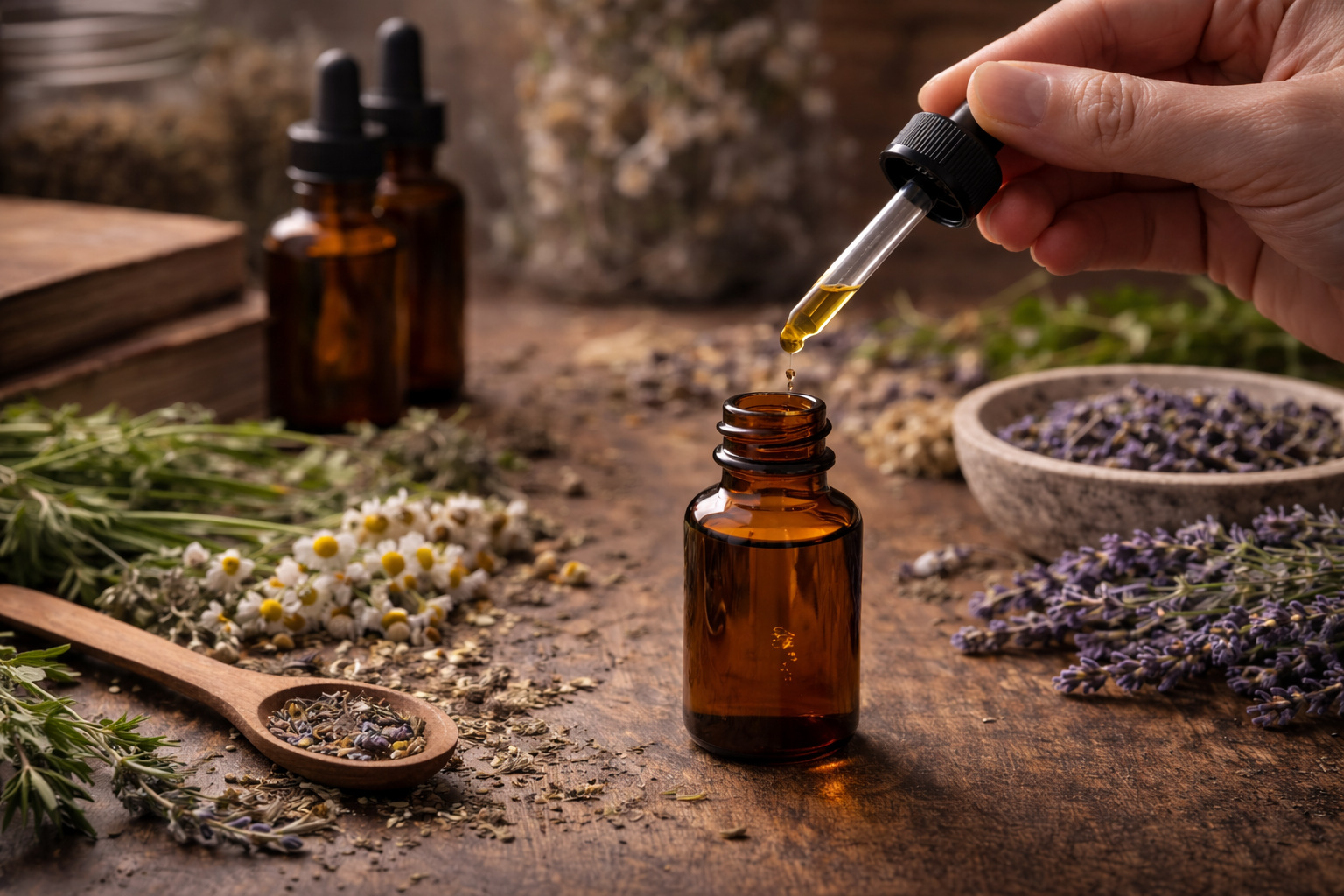
Tinctures are concentrated herbal extracts designed to be taken in small doses. They’re useful when the nervous system feels taxed, digestion needs clarity, or support needs to be precise and consistent. Because tinctures are absorbed quickly, they’re often chosen when someone wants steady, reliable support without adding another large ritual to their day.
Most of my tinctures are formulated to be used gently and over time, rather than as short-term interventions.
Teas
Daily nourishment, rhythm, and repair.
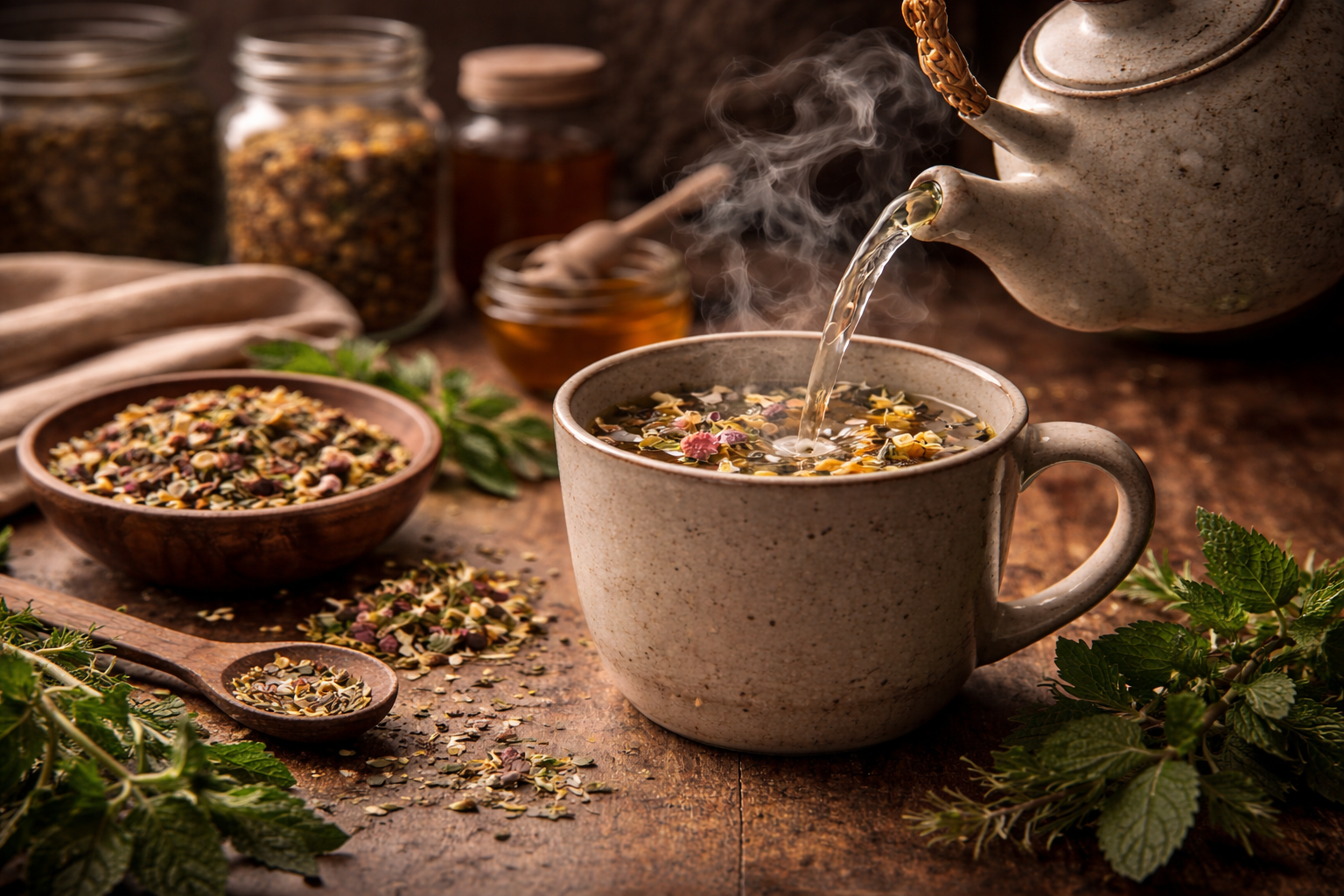
Teas work more slowly and broadly. They’re ideal for daily use, for supporting digestion, easing stress, and offering steady nourishment over time. Because teas engage warmth, hydration, and the senses, they are often easier for the body to receive.
For many people, tea becomes both medicine and practice — a simple ritual that supports consistency, rhythm, and care.
Oils & Topicals
Support through touch and absorption.
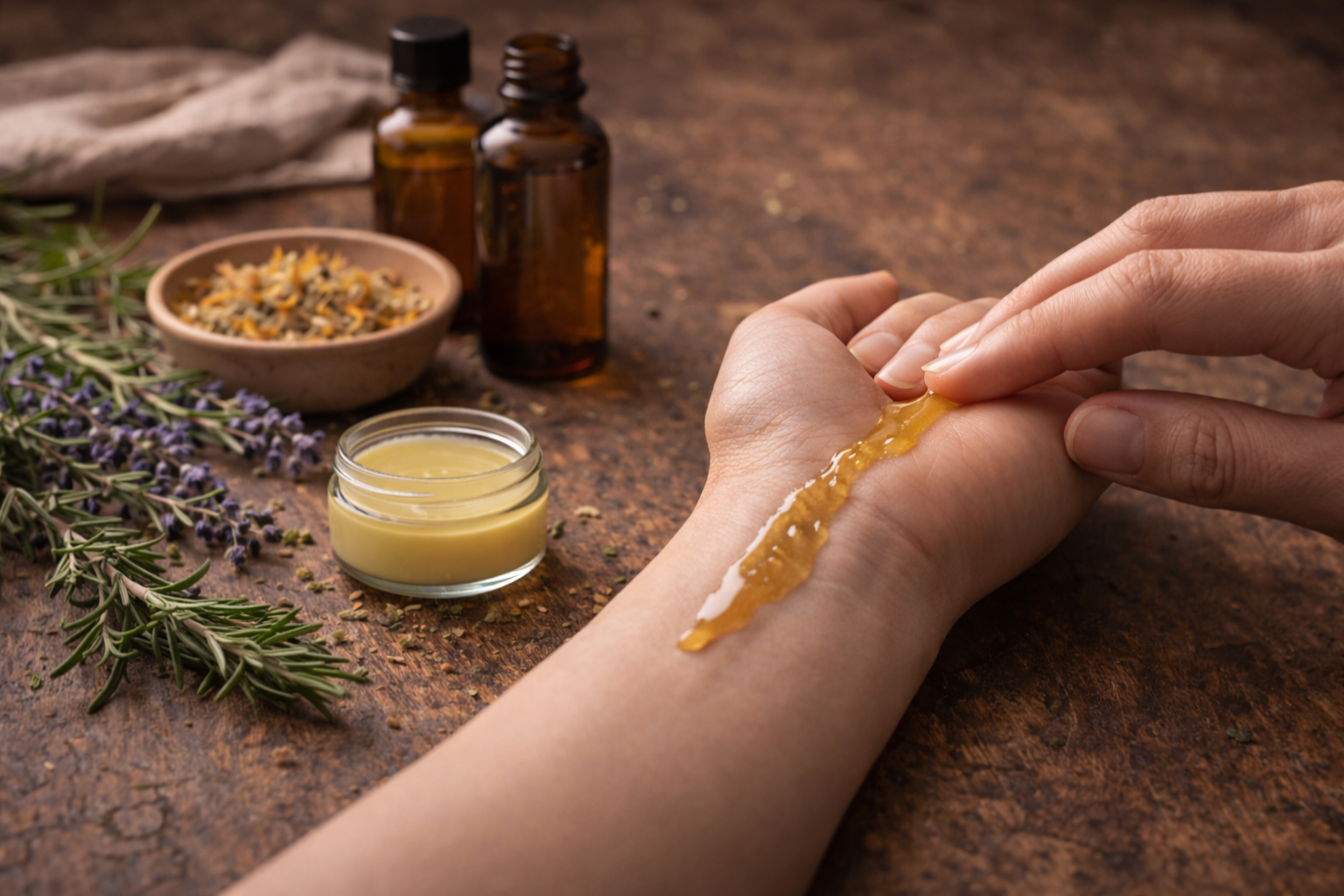
Herbal oils work through the skin and nervous system. Applied topically, they can support circulation, muscle tension, lymphatic flow, and emotional grounding.
Oils are especially useful when the body needs support without digestion, or when touch itself is part of the medicine. They’re often used in self-care rituals, massage, and seasonal practices that invite slowing down and presence.
A note on choosing a form
There is no single right place to begin. Some are drawn to tinctures, others to tea, others to oils and the language of touch. Often, the right starting point is simply what feels possible now.
Forms can meet each other — a tincture added to tea, an oil woven into daily ritual — though simplicity itself is a powerful medicine.
One form, tended over time, is enough.
Featured Plants I Work With
A few of the plants I return to most often in practice.
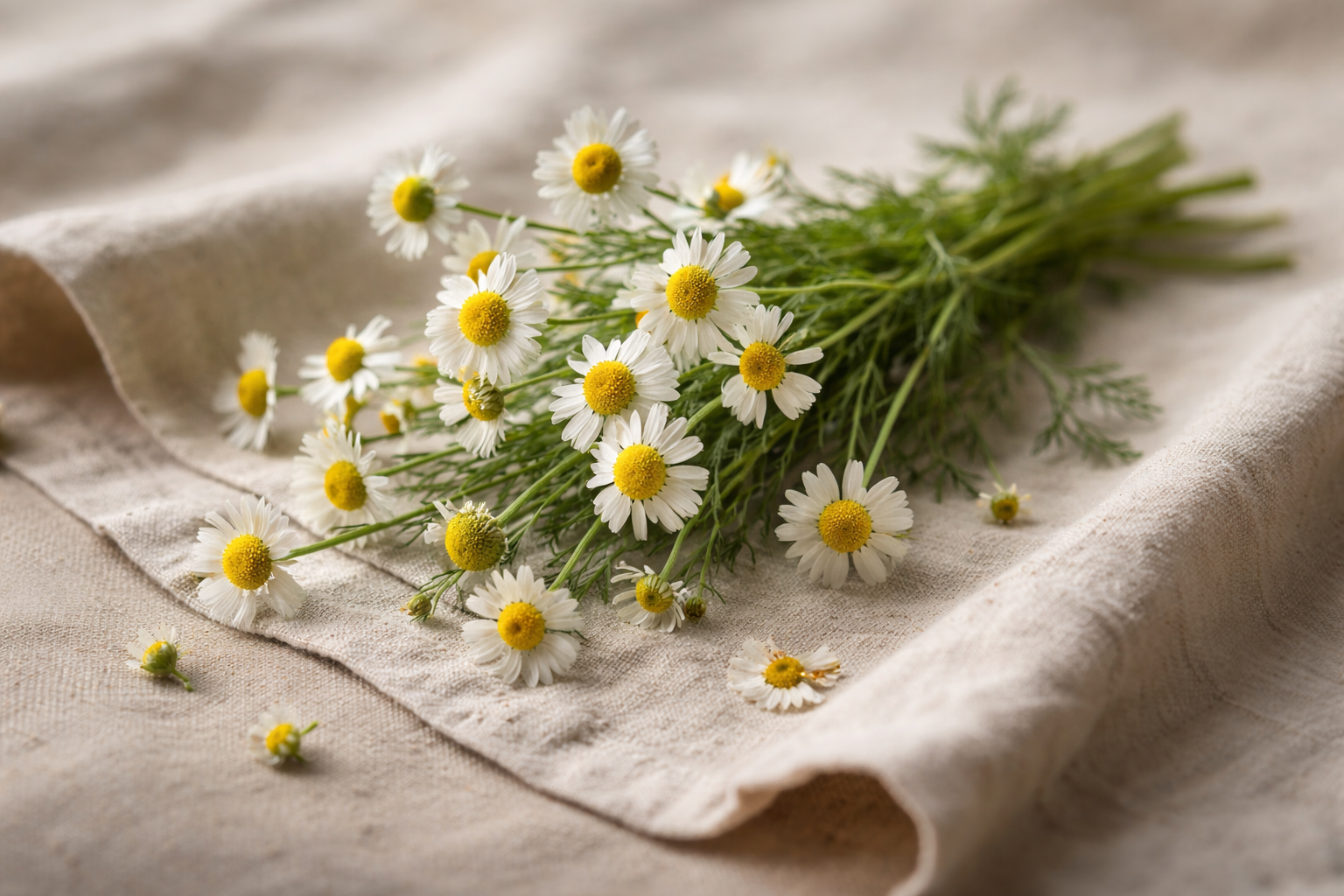
Chamomile: Nervous system and digestive support for calming and ease.
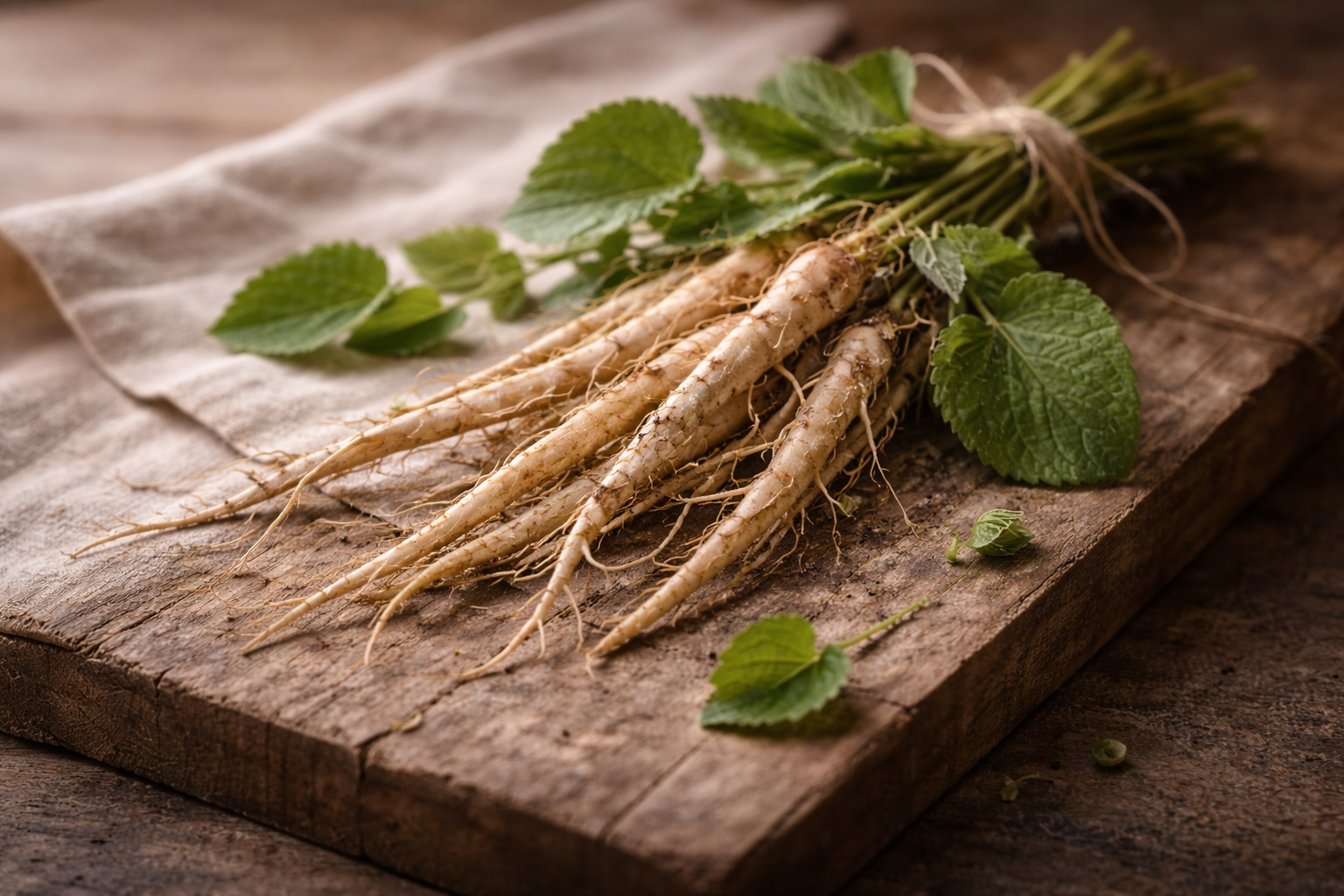
Marshmallow Root: Soothing, moistening support for irritated tissues and the gut.
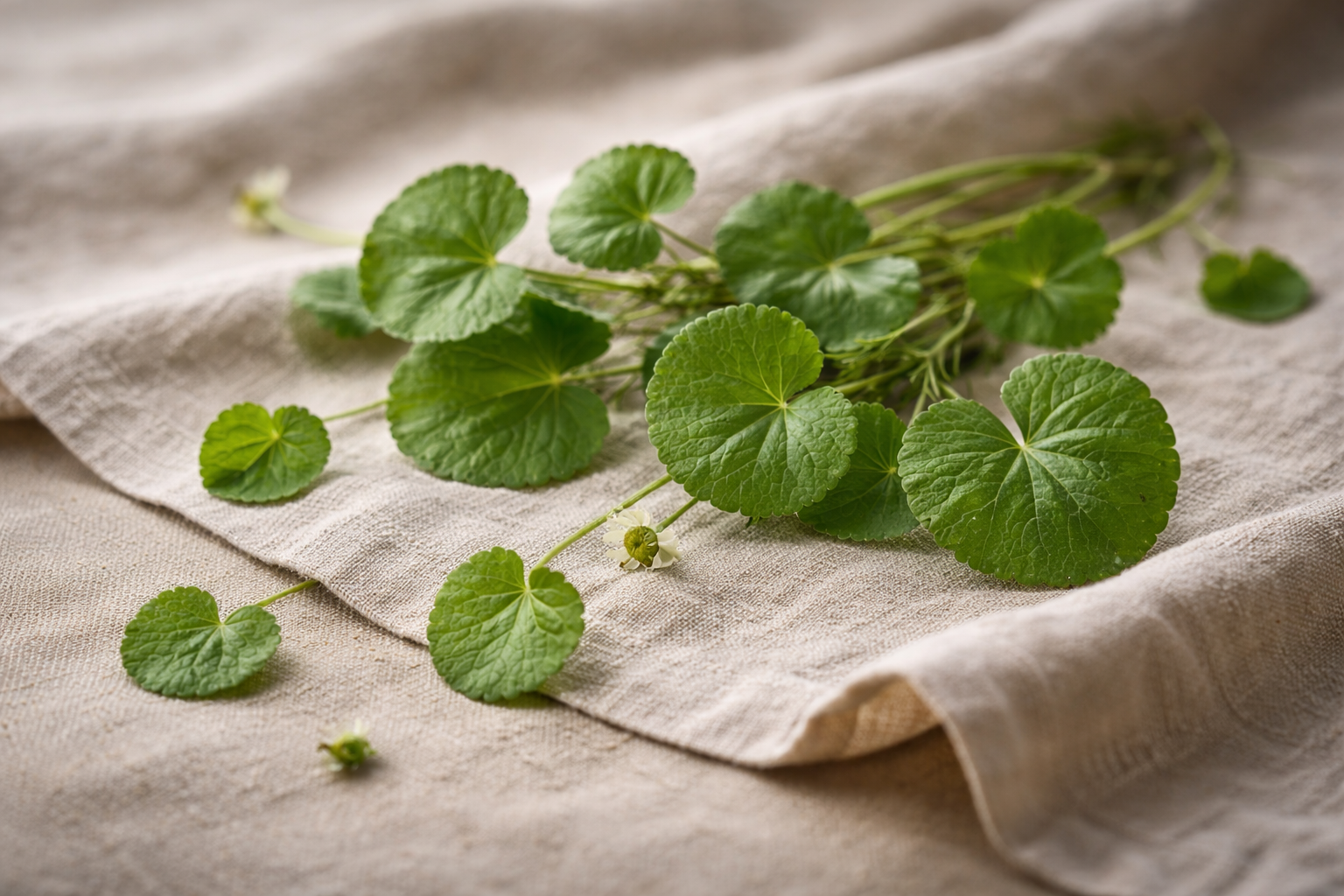
Gotu Kola: Supports clarity, focus, and nervous system resilience.
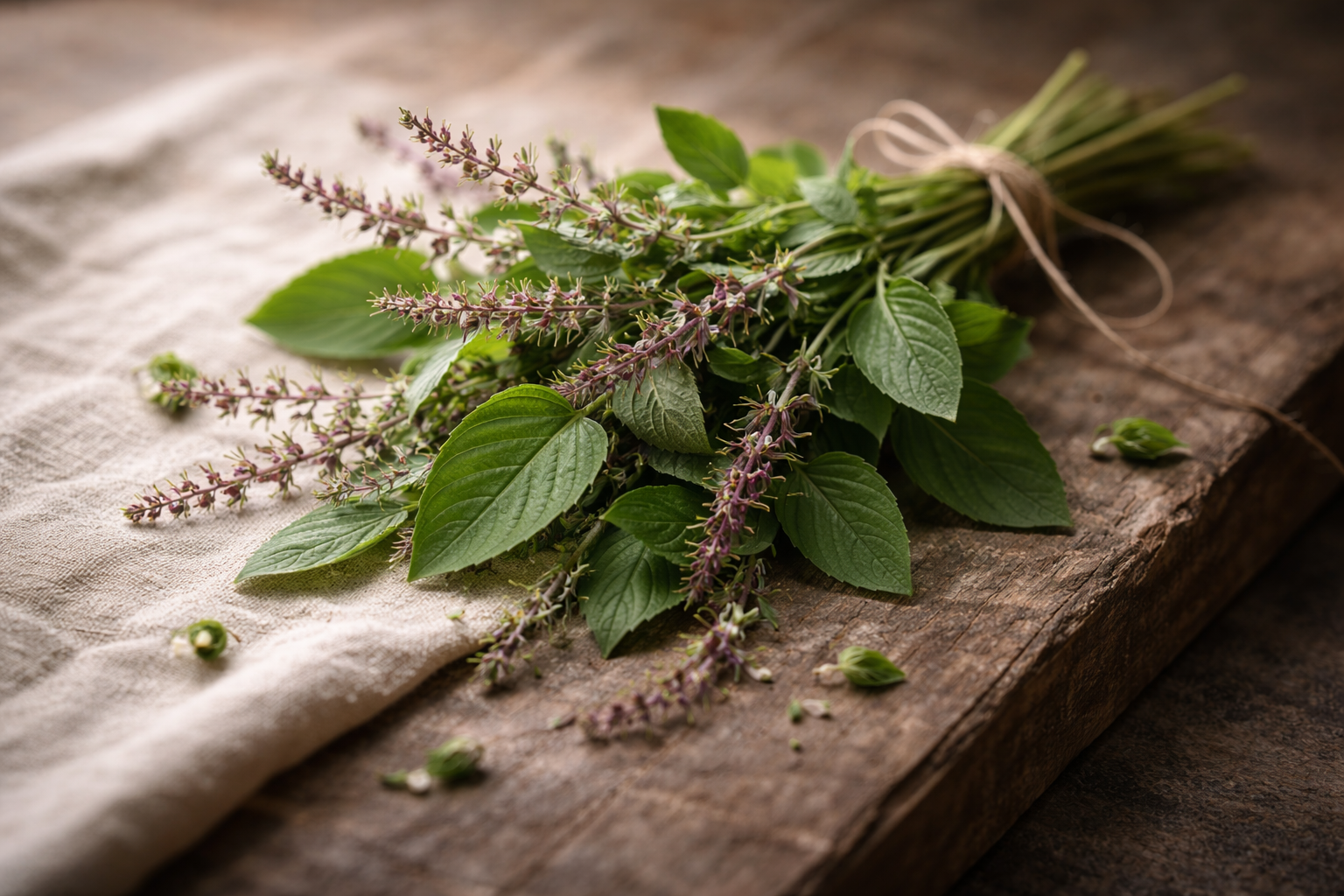
Tulsi (Holy Basil): Adaptive support for stress and daily demands.
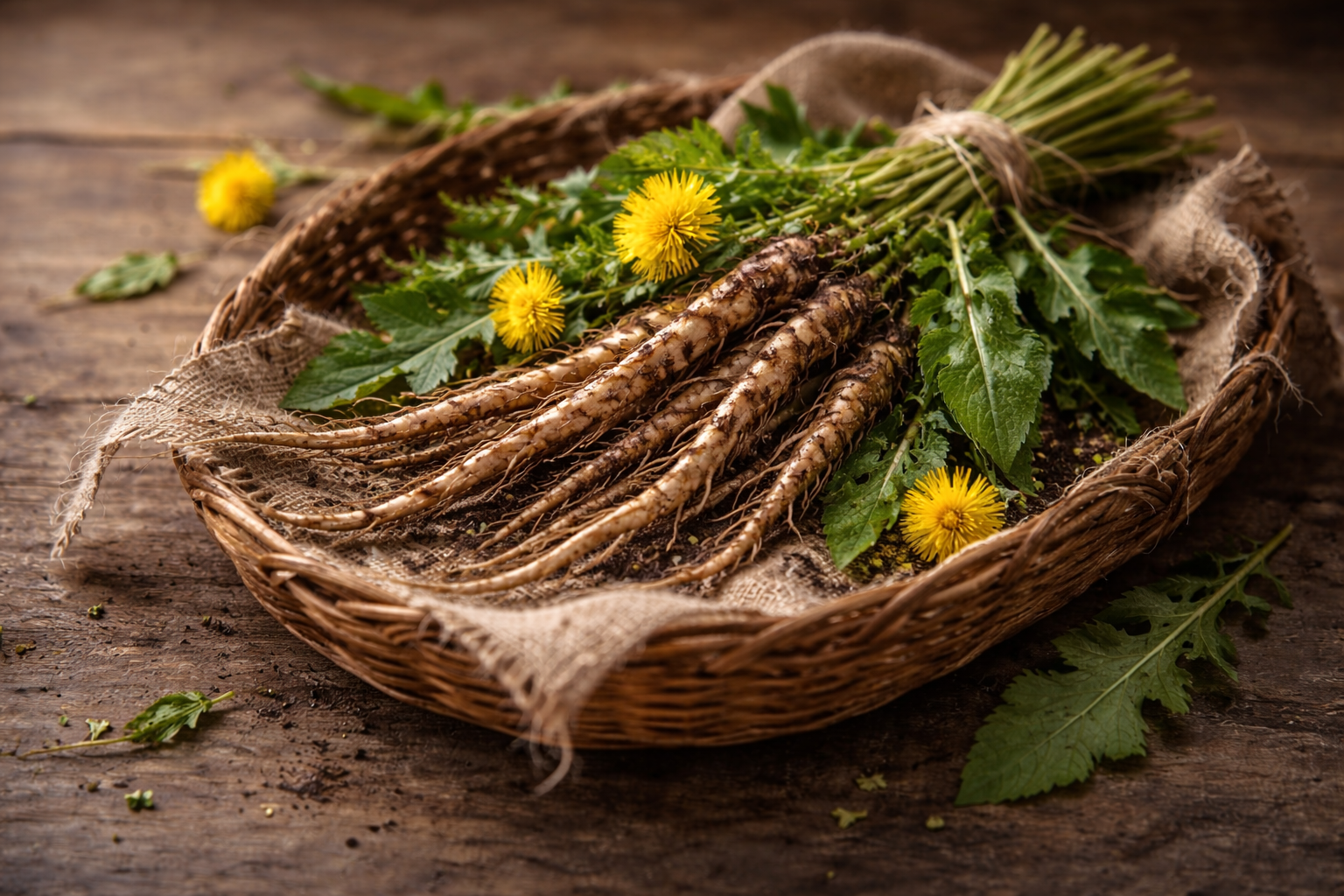
Dandelion Root: Bitter support for digestion, liver function, and elimination.
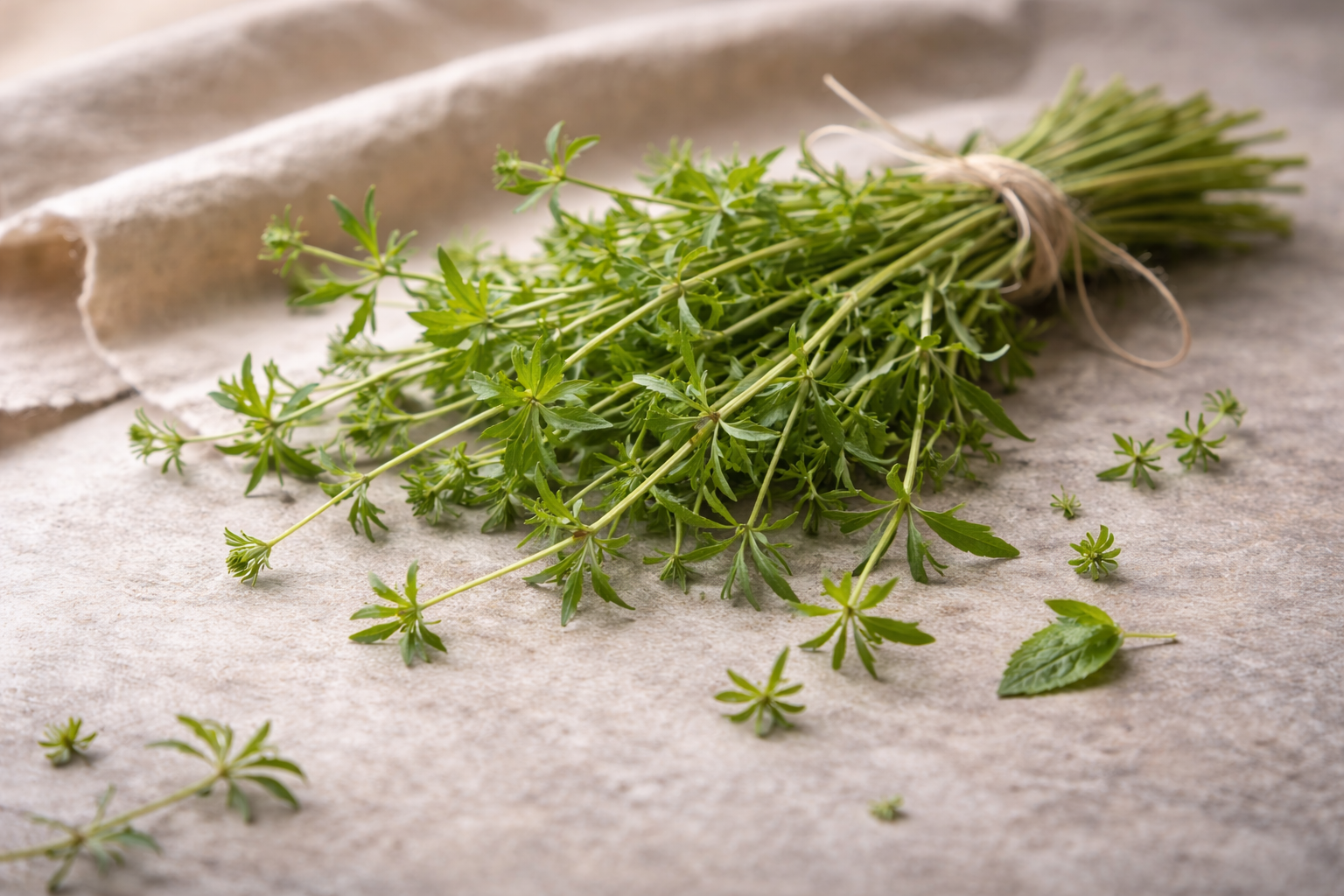
Cleavers: Lymphatic support for movement, clearing, and lightness.
The Apothecary Shelf
Formulas I created and use in my own practice.
This is a working apothecary — a collection of remedies I make and use in my own practice. Each formula is created with intention, tested through relationship, and offered for steady, everyday support rather than quick fixes. You’ll find tinctures, teas, and oils here that are meant to be lived with, returned to, and adapted over time.
All formulas are crafted with gentle, well-researched herbs and intended for steady, everyday use rather than quick fixes.
When the Body Needs to Settle
For sleep, nervous system unwinding, and overstimulation.
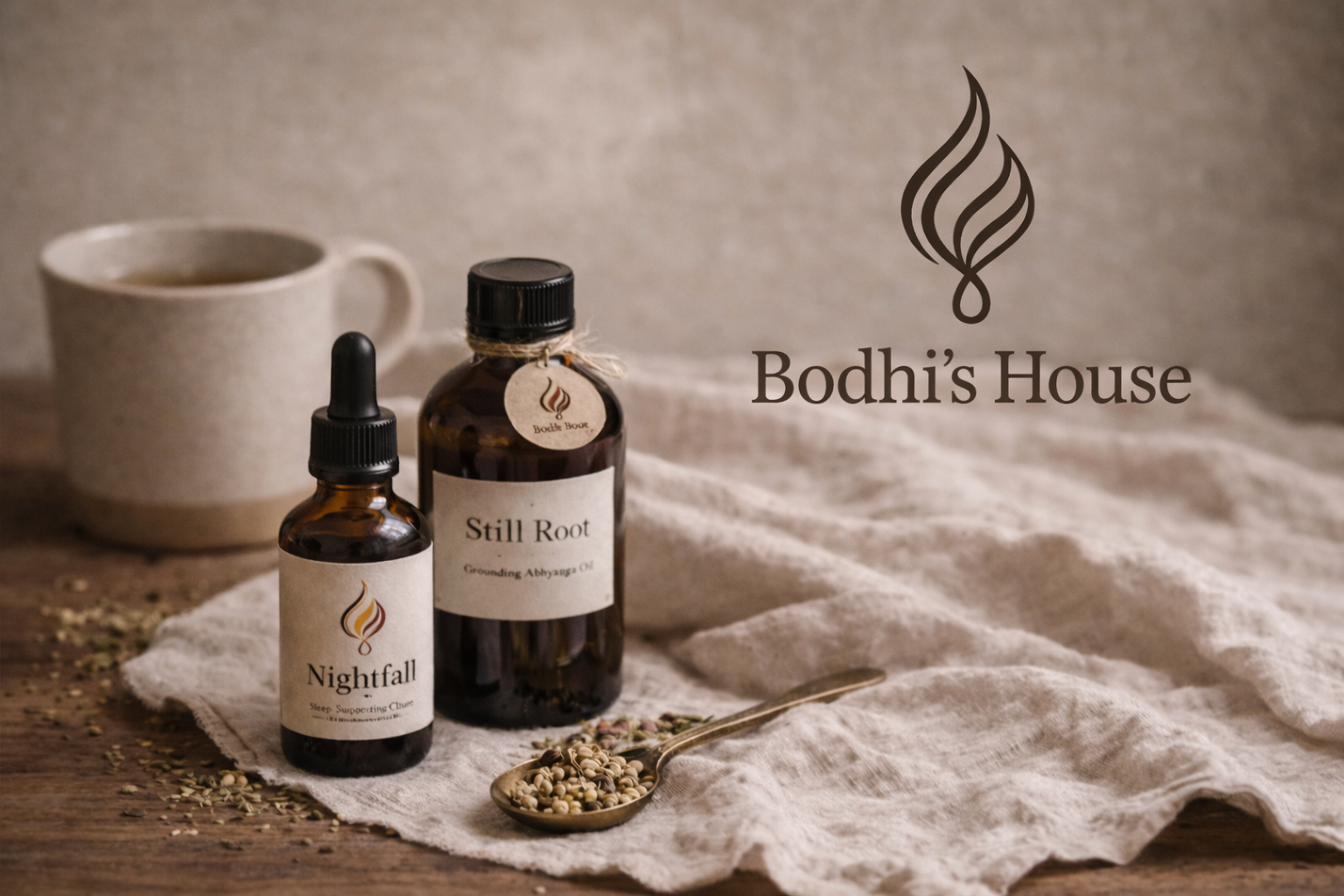
Nightfall
Sleep-supporting tincture for calming an overactive mind and easing the body into rest.
Soft Landing
Evening tea to help the nervous system slow down and release the day.
Still Root
Grounding abhyanga oil to calm vata imbalance, restlessness, and nervous tension.
The Dream State
Working with sleep beyond rest.
Dreamcurrent
A potent dream-activating tincture that deepens sleep, intensifies dream imagery, and supports recall. Best used in small, individualized doses.
When the Mind Needs an Edge
Clarity, focus, and cognitive resilience.
Headwaters
Cognitive-support tincture for mental clarity, focus, and sustained attention.
Clear the source. Think from the top.
First Light
Morning vitality tea for clean energy and clear focus without overstimulation.
When Heat or Cycles Take Over
Cooling, balancing support through transition.
Cooling Point
Fast-acting cooling tincture for heat, irritability, and inflammatory flares.
Balance Point
Cyclical support tincture for hormonal rhythm, regulation, and long-term balance.
Even Flame
Cooling pitta oil for heat, inflammation, and overactivation.
When the Body Needs Clearing
Movement, drainage, and release.
Flow & Clear
Lymph-support tea for stagnation, heaviness, and mucus.
Soft Current
Kapha-balancing oil to support circulation and lymphatic movement.
When the Scalp Needs Nourishment
Circulation and long-term vitality.
Deep Root
Supports scalp health, circulation, and long-term hair vitality & growth.
Where to Begin
There’s no single right place to start.
Many people begin with one form — a tea, a tincture, or an oil — and then layer support over time as their needs shift.
Herbs work in relationship. What starts as one remedy often becomes a rhythm: something you drink, something you take, something you return to. Let yourself explore at your own pace.
Ritual, Not Rules
Make it a rhythm.
Herbal support works best when it follows the natural arc of the day. Morning, afternoon, and evening ask different things from the body — and different remedies can meet those needs in distinct ways.
Many people begin by noticing when support is most needed: steadiness in the morning, focus in the afternoon, settling in the evening. From there, herbs can be layered gently — a tea for daily nourishment, a tincture for more precise support, an oil ritual when the nervous system needs grounding.
This isn’t about doing everything at once. It’s about creating a rhythm that supports you through the day, in a way that feels realistic and sustainable.